Getting Started with Blazor Sankey Diagram in Server App
19 Aug 202614 minutes to read
This section briefly explains about how to include the Blazor Sankey Diagram in your Blazor Server App using Visual Studio, Visual Studio Code, and the .NET CLI.
Create a new Blazor Server App
Create a Blazor Server App using Visual Studio via Microsoft Templates or the Syncfusion® Blazor Extension. For detailed instructions, refer to the Blazor Server App Getting Started documentation.
Run the following command to create a new Blazor Server App.
dotnet new blazor -o BlazorApp --interactivity Server
cd BlazorApp
Alternatively, create a Blazor Server App using Visual Studio Code via Microsoft Templates, the Syncfusion® Blazor Extension, or the C# Dev Kit extension.
Run the following command to create a new Blazor Server App.
dotnet new blazor -o BlazorApp --interactivity Server
cd BlazorApp
NOTE
Configure the appropriate Interactive render mode and Interactivity location while creating a Blazor Server App. For detailed information, refer to the interactive render mode documentation.
Install the required Blazor package
Install Syncfusion.Blazor.Sankey NuGet package. All Syncfusion Blazor packages are available on nuget.org. See the NuGet packages topic for details.
- Go to Tools → NuGet Package Manager → Manage NuGet Packages for Solution.
- Search the required NuGet package (
Syncfusion.Blazor.Sankey) and install it.
Alternatively, you can install the same package using the Package Manager Console with the following command.
Install-Package Syncfusion.Blazor.Sankey -Version 34.2.2Open the terminal and run the following command.
dotnet add package Syncfusion.Blazor.Sankey -v 34.2.2Open the command prompt and run the following command.
dotnet add package Syncfusion.Blazor.Sankey -v 34.2.2Add import namespaces
After the package is installed, open the ~/Components/_Imports.razor file and import the Syncfusion.Blazor and Syncfusion.Blazor.Sankey namespaces.
@using Syncfusion.Blazor
@using Syncfusion.Blazor.Sankey
Register the Blazor service
Open the Program.cs file in Blazor Server App and register the Blazor service and include the required namespace reference using Syncfusion.Blazor; at the top.
builder.Services.AddSyncfusionBlazor();Add script resources
The script can be accessed from NuGet through Static Web Assets. Include the required script references at the end of the <body> section in the App.razor file to enable Sankey Diagram functionality.
<script src="_content/Syncfusion.Blazor.Core/scripts/syncfusion-blazor.min.js" type="text/javascript"></script>Add Blazor Sankey Diagram component
Open a Razor file located in the ~/Components/Pages/*.razor (for example, Home.razor) and add the Blazor Sankey Diagram component inside the razor file.
NOTE
If the interactivity location is set to
Per page/component, define a render mode at the top of the razor file. (For exampleInteractiveServer). If the Interactivity is set toGlobal, the render mode is automatically configured in theApp.razorfile by default.
@rendermode InteractiveServer

@using Syncfusion.Blazor.Sankey

<SfSankey Nodes=@Nodes Links=@Links>

</SfSankey>

@code {
    public List<SankeyDataNode> Nodes = new List<SankeyDataNode>();
    public List<SankeyDataLink> Links = new List<SankeyDataLink>();

    protected override void OnInitialized()
    {
        Nodes = new List<SankeyDataNode>()
        {
            new SankeyDataNode() { Id = "Coffee Production" },
            new SankeyDataNode() { Id = "Arabica" },
            new SankeyDataNode() { Id = "Robusta" },
            new SankeyDataNode() { Id = "Roasted Coffee" },
            new SankeyDataNode() { Id = "Instant Coffee" },
            new SankeyDataNode() { Id = "Green Coffee" },
            new SankeyDataNode() { Id = "North America" },
            new SankeyDataNode() { Id = "Europe" },
            new SankeyDataNode() { Id = "Asia Pacific" },
        };
        Links = new List<SankeyDataLink>()
        {
            new SankeyDataLink() { SourceId = "Coffee Production", TargetId = "Arabica", Value = 95 },
            new SankeyDataLink() { SourceId = "Coffee Production", TargetId = "Robusta", Value = 65 },
            new SankeyDataLink() { SourceId = "Arabica", TargetId = "Roasted Coffee", Value = 60 },
            new SankeyDataLink() { SourceId = "Arabica", TargetId = "Instant Coffee", Value = 20 },
            new SankeyDataLink() { SourceId = "Arabica", TargetId = "Green Coffee", Value = 15 },
            new SankeyDataLink() { SourceId = "Robusta", TargetId = "Roasted Coffee", Value = 30 },
            new SankeyDataLink() { SourceId = "Robusta", TargetId = "Instant Coffee", Value = 25 },
            new SankeyDataLink() { SourceId = "Robusta", TargetId = "Green Coffee", Value = 10 },
            new SankeyDataLink() { SourceId = "Roasted Coffee", TargetId = "North America", Value = 35 },
            new SankeyDataLink() { SourceId = "Roasted Coffee", TargetId = "Europe", Value = 30 },
            new SankeyDataLink() { SourceId = "Roasted Coffee", TargetId = "Asia Pacific", Value = 25 },
            new SankeyDataLink() { SourceId = "Instant Coffee", TargetId = "North America", Value = 15 },
            new SankeyDataLink() { SourceId = "Instant Coffee", TargetId = "Europe", Value = 15 },
            new SankeyDataLink() { SourceId = "Instant Coffee", TargetId = "Asia Pacific", Value = 15 },
            new SankeyDataLink() { SourceId = "Green Coffee", TargetId = "North America", Value = 10 },
            new SankeyDataLink() { SourceId = "Green Coffee", TargetId = "Europe", Value = 8 },
            new SankeyDataLink() { SourceId = "Green Coffee", TargetId = "Asia Pacific", Value = 7 },
        };
        base.OnInitialized();
    }
}
Run the application
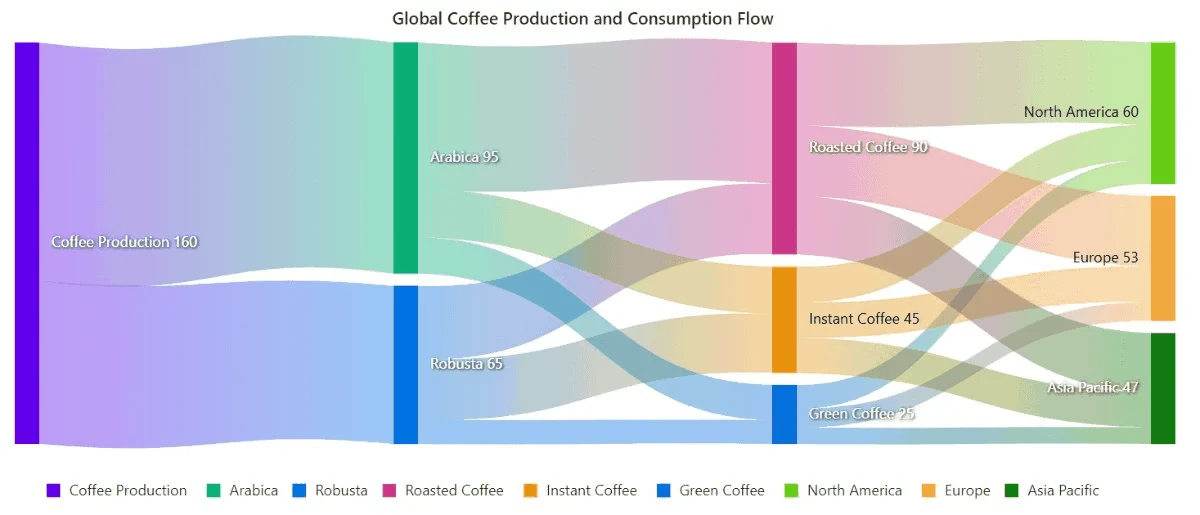
Press Ctrl+F5 (Windows) or ⌘+F5 (macOS) to launch the application. The Blazor Sankey Diagram component will render in your default web browser.
Open the terminal and run the following command.
dotnet runOpen the command prompt and run the following command.
dotnet run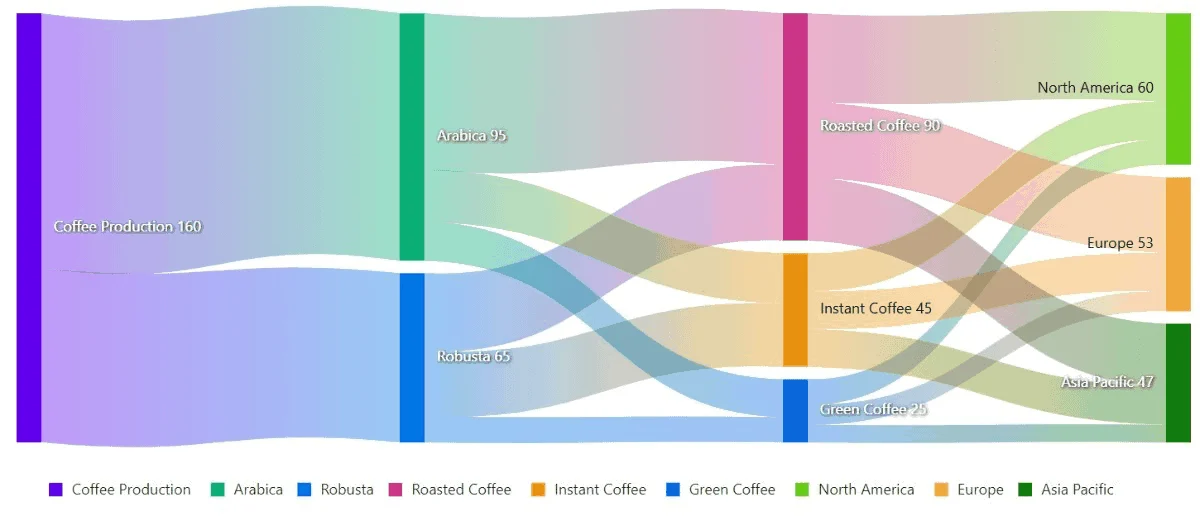
Populate Blazor Sankey Diagram with data
To bind data for the Sankey diagram, you can assign an IEnumerable object to the Nodes and Links properties. These properties define the structure of the nodes and the relationships between them.
@using Syncfusion.Blazor.Sankey

<SfSankey Nodes=@Nodes Links=@Links>

</SfSankey>

@code {
    public List<SankeyDataNode> Nodes = new List<SankeyDataNode>();
    public List<SankeyDataLink> Links = new List<SankeyDataLink>();

    protected override void OnInitialized()
    {
        Nodes = new List<SankeyDataNode>()
        {
            new SankeyDataNode() { Id = "Coffee Production" },
            new SankeyDataNode() { Id = "Arabica" },
            new SankeyDataNode() { Id = "Robusta" },
            new SankeyDataNode() { Id = "Roasted Coffee" },
            new SankeyDataNode() { Id = "Instant Coffee" },
            new SankeyDataNode() { Id = "Green Coffee" },
            new SankeyDataNode() { Id = "North America" },
            new SankeyDataNode() { Id = "Europe" },
            new SankeyDataNode() { Id = "Asia Pacific" },
        };
        Links = new List<SankeyDataLink>()
        {
            new SankeyDataLink() { SourceId = "Coffee Production", TargetId = "Arabica", Value = 95 },
            new SankeyDataLink() { SourceId = "Coffee Production", TargetId = "Robusta", Value = 65 },
            new SankeyDataLink() { SourceId = "Arabica", TargetId = "Roasted Coffee", Value = 60 },
            new SankeyDataLink() { SourceId = "Arabica", TargetId = "Instant Coffee", Value = 20 },
            new SankeyDataLink() { SourceId = "Arabica", TargetId = "Green Coffee", Value = 15 },
            new SankeyDataLink() { SourceId = "Robusta", TargetId = "Roasted Coffee", Value = 30 },
            new SankeyDataLink() { SourceId = "Robusta", TargetId = "Instant Coffee", Value = 25 },
            new SankeyDataLink() { SourceId = "Robusta", TargetId = "Green Coffee", Value = 10 },
            new SankeyDataLink() { SourceId = "Roasted Coffee", TargetId = "North America", Value = 35 },
            new SankeyDataLink() { SourceId = "Roasted Coffee", TargetId = "Europe", Value = 30 },
            new SankeyDataLink() { SourceId = "Roasted Coffee", TargetId = "Asia Pacific", Value = 25 },
            new SankeyDataLink() { SourceId = "Instant Coffee", TargetId = "North America", Value = 15 },
            new SankeyDataLink() { SourceId = "Instant Coffee", TargetId = "Europe", Value = 15 },
            new SankeyDataLink() { SourceId = "Instant Coffee", TargetId = "Asia Pacific", Value = 15 },
            new SankeyDataLink() { SourceId = "Green Coffee", TargetId = "North America", Value = 10 },
            new SankeyDataLink() { SourceId = "Green Coffee", TargetId = "Europe", Value = 8 },
            new SankeyDataLink() { SourceId = "Green Coffee", TargetId = "Asia Pacific", Value = 7 },
        };
        base.OnInitialized();
    }
}
Add title
Using the Title property, you can add a title to the Sankey diagram to provide the user with quick information about the data plotted in the Sankey diagram.
@using Syncfusion.Blazor.Sankey

<SfSankey Title="Global Coffee Production and Consumption Flow" Nodes=@Nodes Links=@Links>
</SfSankey>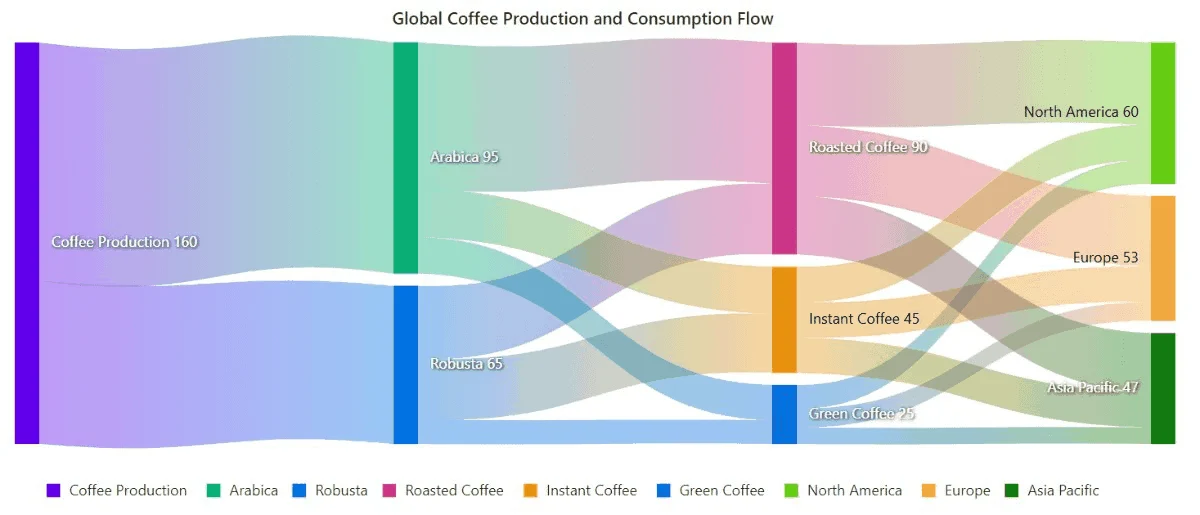
Add node labels
You can add data labels to improve the readability of the Sankey diagram. This can be achieved by setting the Visible property to true in the SankeyLabelSettings.
@using Syncfusion.Blazor.Sankey

<SfSankey Title="Global Coffee Production and Consumption Flow" Nodes=@Nodes Links=@Links>
    <SankeyLabelSettings Visible="true"></SankeyLabelSettings>
</SfSankey>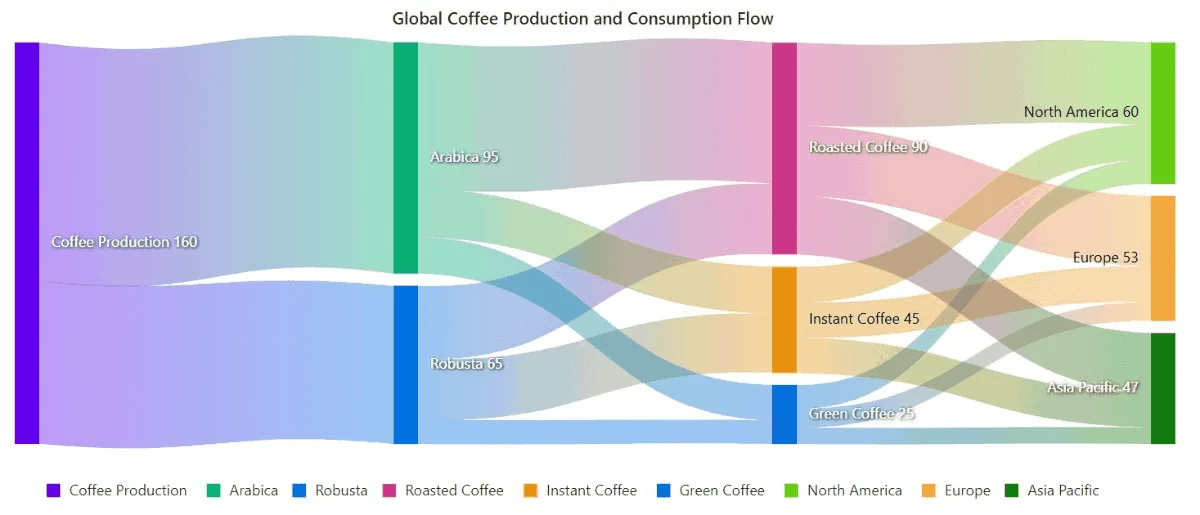
Enable tooltip
The tooltip can be enabled by setting the Enable property in SankeyTooltipSettings to true. However, the tooltip is enabled by default in the Sankey diagram.
@using Syncfusion.Blazor.Sankey

<SfSankey Title="Global Coffee Production and Consumption Flow" Nodes=@Nodes Links=@Links>
   <SankeyTooltipSettings Enable="true"></SankeyTooltipSettings>
</SfSankey>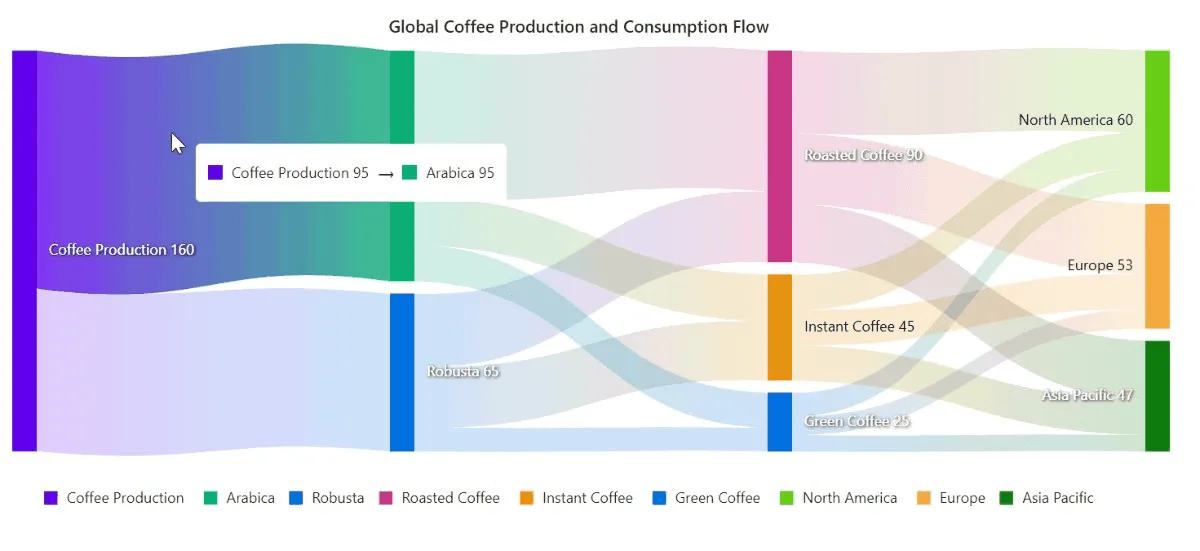
Enable legend
You can use legend for the Sankey diagram by setting the Visible property to true in SankeyLegendSettings. However, the legend is enabled by default in the Sankey diagram.
@using Syncfusion.Blazor.Sankey

<SfSankey Title="Global Coffee Production and Consumption Flow" Nodes=@Nodes Links=@Links>
    <SankeyLegendSettings Visible="true"></SankeyLegendSettings>
</SfSankey>